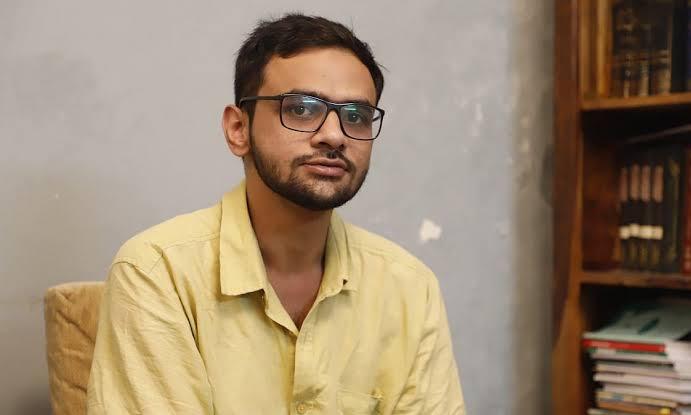
The Delhi High Court on Friday sought the stand of the city police on a plea by activist Umar Khalid, who is requesting bail in a case under the anti-terror law UAPA. The case concerns the “larger conspiracy” behind the February 2020 riots in north-east Delhi.
Issuing a notice in the matter, a bench of Justices Prathiba M Singh and Vikas Mahajan directed the Delhi Police to file its response within two weeks. Khalid’s counsel highlighted that this is the activist’s third bail application since his arrest.
The bench is set to hear Khalid’s plea on August 27, coinciding with the bail appeal of co-accused Sharjeel Imam.
Khalid has challenged a trial court’s decision from July 4 that rejected his previous bail application. The Additional Solicitor General, S V Raju, representing the Delhi Police, noted that Imam’s bail plea was similarly denied by the same trial court order. He suggested that both cases may be addressed together by the bench.
Arrested in September 2020, Khalid faces charges under the Unlawful Activities (Prevention) Act (UAPA), accused of being a mastermind behind the February 2020 riots which left 53 dead and over 700 injured. This violence erupted amidst protests against the Citizenship (Amendment) Act (CAA), 2019, and the National Register of Citizens (NRC).
Alongside Khalid, activists Sharjeel Imam, Khalid Saifi, and former AAP councillor Tahir Hussain have been implicated in the larger conspiracy case, which the Delhi Police’s Special Cell is currently investigating.
On July 4, the trial court declined Khalid’s bail application, stating there was “no option but to follow” the Supreme Court’s January 5 order, which restricted the court’s ability to entertain the plea or grant relief.
On September 2, 2025, a high court division bench similarly denied bail to Khalid. Subsequently, on January 5, the Supreme Court upheld this verdict, granting bail instead to co-accused Gulfisha Fatima, Meeran Haider, Shifa Ur Rehman, Mohammad Saleem Khan, and Shadab Ahmad.
Justices Aravind Kumar and N V Anjaria indicated that a prima facie case existed against Khalid and Imam under the UAPA. They noted that the participation of all accused cannot be equated due to the “hierarchy of participation” involved in the case.