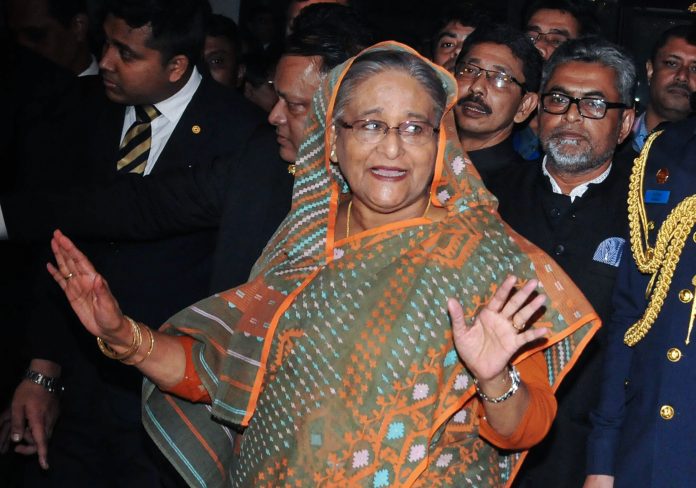
In a bold statement, Sheikh Hasina, the ousted former Prime Minister of Bangladesh, emphasized her intention to return to her home country only after restoring “participatory democracy,” lifting the ban on the Awami League, and ensuring free and fair elections.
Speaking exclusively via email to PTI from an undisclosed location in India, Hasina accused the unelected interim government led by Dr. Muhammad Yunus of jeopardizing vital ties with India while empowering extremist factions. “I am immensely grateful to India’s government and its people for their kind hospitality,” Hasina expressed, reflecting on her asylum.
Hasina, who served as Bangladesh’s longest-serving leader, highlighted that the foremost requirement for her return is the restoration of democracy that the Bangladeshi people demand. “The interim government must rescind the ban on the Awami League and pave the way for inclusive elections to rebuild our political landscape,” she asserted.
Having fled Bangladesh on August 5, 2024, amidst escalating anti-government protests that forced her resignation, Hasina recognized her government had lost control of the situation, describing it as “regrettable.” However, she attributed the unrest to “seasoned political firebrands masquerading as student leaders” who intensified tensions.
Amid speculations surrounding the upcoming general elections set for February next year, Hasina rebutted claims insinuating that she called for a boycott. She firmly stated that any election excluding her party would lack credibility. “Tens of millions of people support us… It would be a huge missed opportunity for a country that desperately needs a government with genuine consent of the people,” she added emphatically.
In her critical assessment of the Yunus administration, Hasina claimed that Yunus’ antagonism towards India threatens Bangladesh’s significant strategic partnership with its neighbor. “Yunus’ hostility to India is foolish and self-defeating. He is unelected, chaotic, and dependent on extremist forces,” she asserted, warning that his foreign policy blunders could jeopardize bilateral ties.
Reassuring Indian citizens concerned about the political situation in Bangladesh, Hasina maintained, “The interim government doesn’t represent what our people think. India is and will remain our nation’s most important friend.” Her remarks aimed to stabilize perceptions amid growing political tensions.
Additionally, Hasina expressed her willingness to undergo trial under international supervision, including at the International Criminal Court (ICC). She accused Yunus of skirting such scrutiny, claiming that “an impartial tribunal would acquit me.” Furthermore, she dismissed the Bangladesh International Crimes Tribunal, which has sought the death penalty against her, labelling it a “kangaroo tribunal” orchestrated to politically neutralize her and the Awami League.
“They want to eliminate us as political forces. The fact that they would use the death penalty to silence opponents shows how little respect they have for democracy or due process,” Hasina insisted, underscoring her determination to defend her political legacy.
In a candid observation, Hasina suggested that while Yunus initially garnered passive support from certain Western liberals, this backing is diminishing as they observe his appointments of radicals and discrimination against minorities. She urged a reconsideration of their support, emphasizing the need for a stable and democratic Bangladesh.