Supreme Court Refers Direct Anticipatory Bail Pleas to Bench
The Supreme Court has referred the issue of direct anticipatory bail pleas in high courts to a three-judge bench, raising concerns over practices in Kerala.
 Admin
Admin 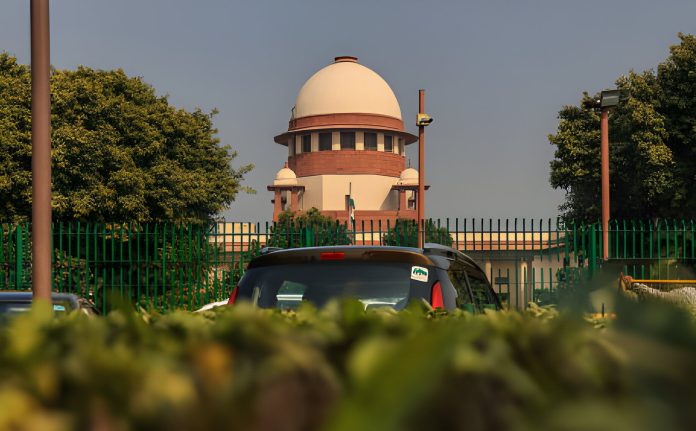
The Supreme Court of India has made a significant move on Wednesday by referring the critical question of whether litigants can directly seek anticipatory bail from high courts or must approach the sessions court first to a three-judge bench for further deliberation.
This decision highlights the evolving legal framework concerning anticipatory bail applications, a subject of considerable debate in India. The bench, which included Justices Vikram Nath and Sandeep Mehta, underscored the need for a detailed examination of the matter, emphasizing that this issue warrants the attention of a larger bench.
Earlier, the apex court appointed senior advocate, Siddharth Luthra, as amicus curiae to assist in navigating the complexities surrounding anticipatory bail.
The Supreme Court raised eyebrows regarding the Kerala High Court’s practice of accepting anticipatory bail applications directly from litigants, sidestepping the sessions court entirely. “One issue that is bothering us is that in the Kerala High Court, anticipatory bail applications are regularly entertained directly. Why is that so?” the bench questioned, seeking clarity on this prevalent approach.
On September 8, the Supreme Court had expressed concerns about this standard operating procedure in Kerala. The judges noted that their apprehension stemmed from the apparent disregard for the established hierarchy in bail applications, which is underscored in both the old Code of Criminal Procedure and the new Bharatiya Nagarik Suraksha Sanhita (BNSS), 2023. Section 482 of BNSS describes the framework for granting bail to individuals fearing arrest.
The justices highlighted, “It doesn’t happen in any other state. Only in the Kerala High Court… applications for anticipatory bail are regularly entertained directly.” This pointed observation indicates a potential anomaly in judicial practices specific to Kerala.
The Supreme Court’s inquiry follows a plea from two individuals challenging a Kerala High Court order that denied them anticipatory bail after they approached the high court directly, bypassing the sessions court. Their case has triggered a broader discussion surrounding the safeguards and processes in place when seeking anticipatory bail in India.
Looking to address the implications of this practice, the Supreme Court remarked that such a deviation from norms might undermine the proper factual records that are typically examined by sessions courts. “We are inclined to consider whether the option to approach the high court is a matter of choice for the accused or whether it should be mandatory to first go to the sessions court,” the bench articulated.
This reference to a three-judge bench marks a crucial point in Indian judicial discourse, as the Supreme Court seeks to reach a conclusive and well-defined position on anticipatory bail protocols. The apex court has also directed the Kerala High Court’s Registrar General to provide a response to their observations, thereby ensuring a comprehensive examination of the issue at hand.
The debate surrounding anticipatory bail is pivotal in balancing individual rights against systemic accountability. As the Supreme Court prepares for hearings, legal experts anticipate that the outcome will significantly impact the procedural landscape concerning anticipatory bail across India.